


Brake Safety Week 2026: August 23-29
The Commercial Vehicle Safety Alliance’s (CVSA) Brake Safety Week will take place August 23-29, 2026. During this annual event, certified inspectors across North America conduct random brake system inspections on large trucks and buses. Any vehicle that fails inspection is placed out of service (OOS), which affects the carrier’s Compliance, Safety, Accountability (CSA) score. This year’s focus is on brake drums and rotors. For PTP Transport, brake safety isn’t just a once-a-year focus. It’s a part of our daily, routine safety inspections.
Why the 20 Percent Rule Matters
Every year, the top brake-related OOS violation is failure to meet CVSA’s 20% defective brake rule. If 20% or more of a vehicle’s brakes are impaired, that vehicle is placed OOS. A typical five-axle tractor-trailer has 10 brakes, so this means if just two brakes fail inspection, the truck exceeds the threshold and is placed OOS.
In 2025, 15% of all vehicles inspected during Brake Safety Week received OOS violations. Another 574 vehicles were placed OOS in April 2026 due to brake-related violations found during CVSA’s unannounced Brake Safety Day.
2026 Focus Area: Brake Drums and Rotors
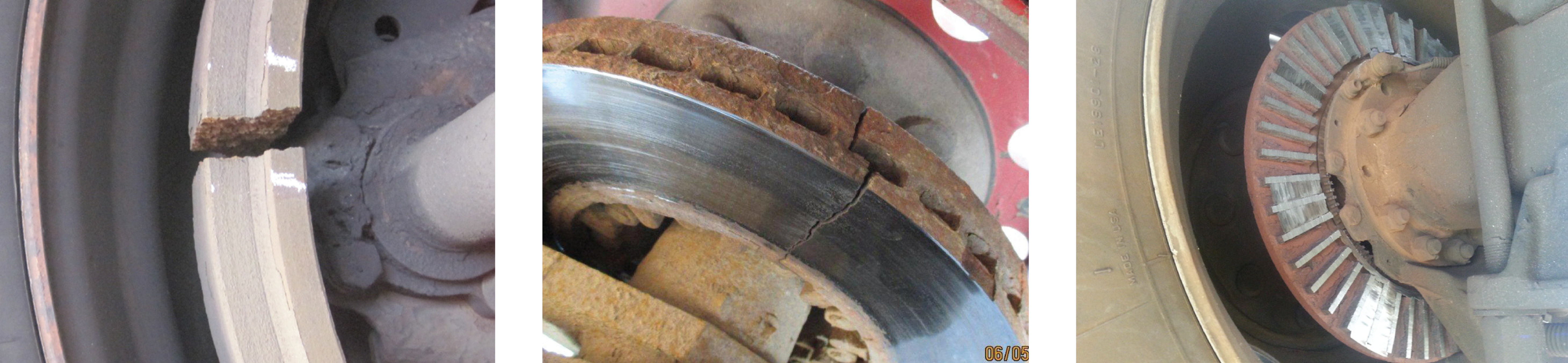
CVSA has named brake drums and rotors as the official focus area for Brake Safety Week 2026. Drum and rotor issues can affect a vehicle’s brake efficiency, and broken pieces that dislodge while a truck is traveling can cause serious damage to other vehicles and injury to the motoring public. CSVA released eight tips from commercial motor vehicle inspectors to help ensure brake drums and rotors have no safety issues during a roadside inspection.
- Inspect visible portions of the drum or rotor as part of your pre- and post-trip inspections.
- Look for signs of cracked or broken pieces in the friction surface of the rotor.
- Look for cracks that run through to the outer portion of the drum or missing pieces, where visible.
- On disc brakes, pay attention to the condition of the rotor. Heavily rusted rotors across the entire friction surface indicate an inoperative brake.
- If the rotor is grooved, indicating metal-to-metal contact, that means the brake pads are worn and the shoe is making contact with the rotor.
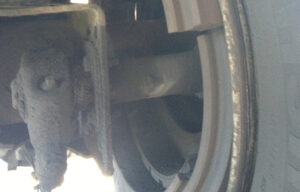
- Ensure the rotor is not worn to the extent that the center vents are exposed.
- Make sure all repairs are consistent with the brake manufacturer’s requirements and guidelines.
- Note any issues in your driver vehicle inspection reports and report them to the motor carrier.
Download CSVA’s Brake Safety Week Focus Area Tip Sheet
Inspectors will also be conducting the following during Brake Safety Week:
- Checking brake lines and hoses for kinks, leaks, cracks and chafing, listening for hissing sounds that could signal an air leak.
- Testing warning lights and alarm systems, verifying that slack adjusters are properly set to maintain correct shoe-to-drum clearance.
- Running an air-leak loss rate test with the service brake fully applied. Pressure shouldn’t drop more than 3 PSIfor a single vehicle or 4 PSI for a combination vehicle within one minute.
Drivers Should Build Safety Into Every Pre-Trip and Post-Trip Inspection
Treat every pre-trip and post-trip inspection with the same level of attention of a CVSA inspector. PTP drivers are trained to catch small issues before they become violations. When a driver finds a brake issue, it gets documented in the Driver Vehicle Inspection Report (DVIR) and reported immediately so it can be addressed and repaired according to manufacturer guidelines.
This attention to safety and consistency is what keeps our fleet moving safely and keeps our drivers protected, along with everyone else who shares the road.
PTP Cares About Our Drivers’ Safety
All PTP drivers participate in our ongoing employee safety training program. Safety is emphasized and helps ensure each driver and load arrives at its destination safely.
At PTP Transport, we’re committed to helping our drivers succeed on the road and beyond. Visit our website to learn more about driving for PTP and browse our open positions.